Nysse: Thousands of new residents have moved to areas along the Tramway in Tampere
A significant proportion of Tampere residents already live within the Tramway’s catchment area. In 2025, nearly one in four Tampere residents lived within 400 metres of a tram stop, and nearly one in three within 600 metres. The extension to Ruotula in Tampere and Partola in Pirkkala will bring high-quality, accessible public transport within reach of even more people.
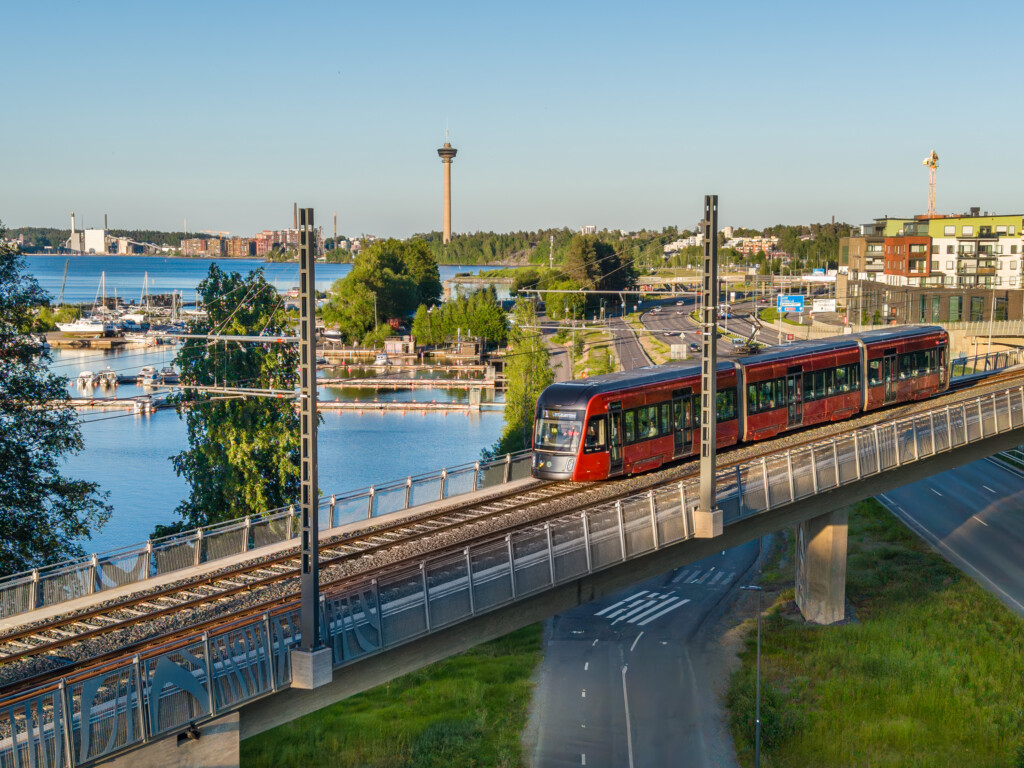
In Tampere, the number of people living in the vicinity of the Tramway has grown significantly since tram services began in 2021. According to a study conducted by experts from Nysse and the City of Tampere’s comprehensive planning team, thousands of new residents moved to areas near tram stops between 2021 and 2025. At the same time, a growing proportion of Tampere residents live within easy reach of high-quality, accessible public transport.
The study examined changes in the number of residents and workplaces at different distances from tram stops. Only actual walking distances to the stops were taken into account. The population data is based on the City of Tampere’s Facta population register, updated in 2025, while the workplace data is based on the 2023 YKR data (Monitoring System of Spatial Structure and Urban Form).
Population growth along the Hervanta and TAYS tram routes
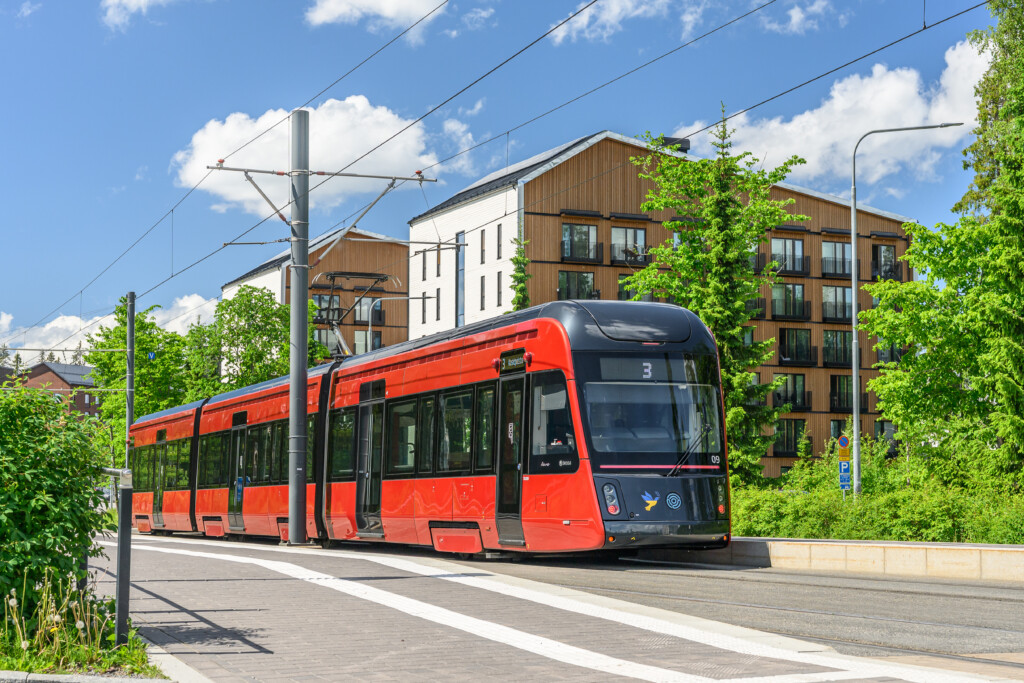
In August 2021, tram services began from Kaupin kampus to Sorin aukio and from Hervantajärvi to Pyynikintori. When services began, 4,600 Tampere residents, or approximately 16 per cent of the city’s population, lived within 400 metres of a tram stop. In 2025, the corresponding number of residents had grown to 48,400. This represents an increase of 19 per cent over four years.
The study also examined population figures at greater distances from tram stops. In 2021, when tram services began to Hervanta and the TAYS Hospital (Kaupin kampus), 58,100 people lived within 600 metres of a tram stop. In 2025, the corresponding number of residents was almost 67,000, representing an increase of more than 15 per cent.
Extension to Lentävänniemi and the current situation
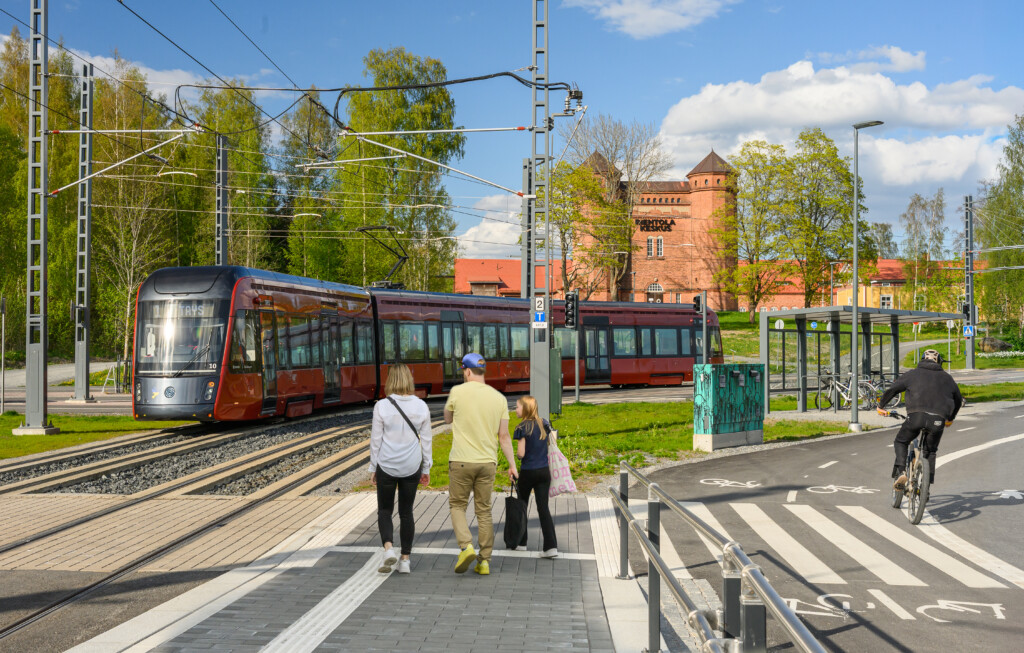
Following the first phase of construction, the Tramway was extended in stages from Pyynikintori to Lentävänniemi. Services from Pyynikintori to Santalahti began in August 2023, and to Pyhällönpuisto in Lentävänniemi in January 2025. In 2025, nearly 10,900 people lived within 400 metres of a tram stop on the section between Pyynikintori and Pyhällönpuisto, and 13,400 residents within 600 metres.
Looking at Tampere’s entire tram network, a significant proportion of the city’s population already lives within its catchment area. In 2025, 22.5 per cent of Tampere residents lived within 400 metres of a tram stop, and 30.5 per cent of the city’s population lived within 600 metres.
– The Tramway serves not only individual neighbourhoods but a significant proportion of Tampere’s entire population. Population trends show that the first-phase tram routes to Hervanta and TAYS Hospital already reached a large number of Tampere residents. Currently, nearly one in four Tampere residents lives within 400 metres of a tram stop and nearly one in three within 600 metres. This reflects the Tramway’s strong position as part of the urban structure and everyday mobility, says Leena Huhtala, Public Transport Planner at Nysse.
Well-planned land use creates sustainable growth
In Tampere, land use is planned and monitored over the long term to ensure sustainable urban growth. The aim is to create an attractive, well-functioning city where high-quality public transport makes everyday life easier and supports the city’s growth.
According to the goals set in the city’s detailed plan programme, a majority of residential construction is planned for areas within the Tramway’s catchment area. Currently, the figure is nearly 90%, and the work continues each year through individual local plans. Population growth along the Tramway shows that urban densification and land-use planning have been successful in many areas. At the same time, a more compact urban structure supports the development of public transport and enables more efficient operations.
– In line with the city’s objectives, population growth in Tampere has been concentrated in the growth and vitality zone identified in the comprehensive plan and the city strategy. New residents have moved particularly to central areas and areas well served by high-capacity public transport. This helps create a compact, well-functioning and lower-emission city, says Jukka-Antero Aaltonen, Planning Architect at Tampere City.
In addition, a mobility survey conducted by Nysse in spring 2026 examined how far people are willing to walk to a tram stop. The survey received approximately 3,000 responses, and the results show that willingness to walk decreases significantly when the distance to a tram stop exceeds 600 metres. Beyond this distance, only around one in four respondents said they were willing to walk to the stop. The findings indicate that the accessibility of stops plays a role in the use of public transport. In densely built-up areas, tram passenger numbers are also typically higher.
Results support further tramway development
Tampere has made a concerted effort to develop a strong public transport and tram culture. The study shows that the tram has established itself as part of everyday life in Tampere. Over the past five years, 79 million passenger journeys have been made by tram, and today 37 per cent of all Nysse journeys are made by tram.
Growing passenger numbers and housing development concentrated along the Tramway support further extensions of the network. The Tramway is currently being extended to Ruotula in Tampere and Partola in Pirkkala, with services scheduled to begin in August 2028. The next extension to Linnainmaa in Tampere and Suuppa in Pirkkala is planned for the 2030s. The results of the study will be used to assess future passenger demand and the required level of public transport services.
– The tram’s popularity is particularly evident during peak hours. Many passengers choose the tram over parallel bus connections. Growing tram passenger numbers challenge us to ensure sufficient capacity and to maintain high service levels also in the future, says Huhtala.
Nysse develops public transport with a focus on effectiveness and sustainability. Passenger numbers, people’s travel habits and changes in the urban structure are monitored so that investments can be directed where they provide the greatest benefit to residents. In addition to extending the Tramway, another key investment is the Plusbus service, scheduled to launch in 2028, which aims to provide tram-like public transport in areas not served by the Tramway.
Press release (in Finnish): www.nysse.fi